

A Sacred Responsibility, Now Being Executed with Precision
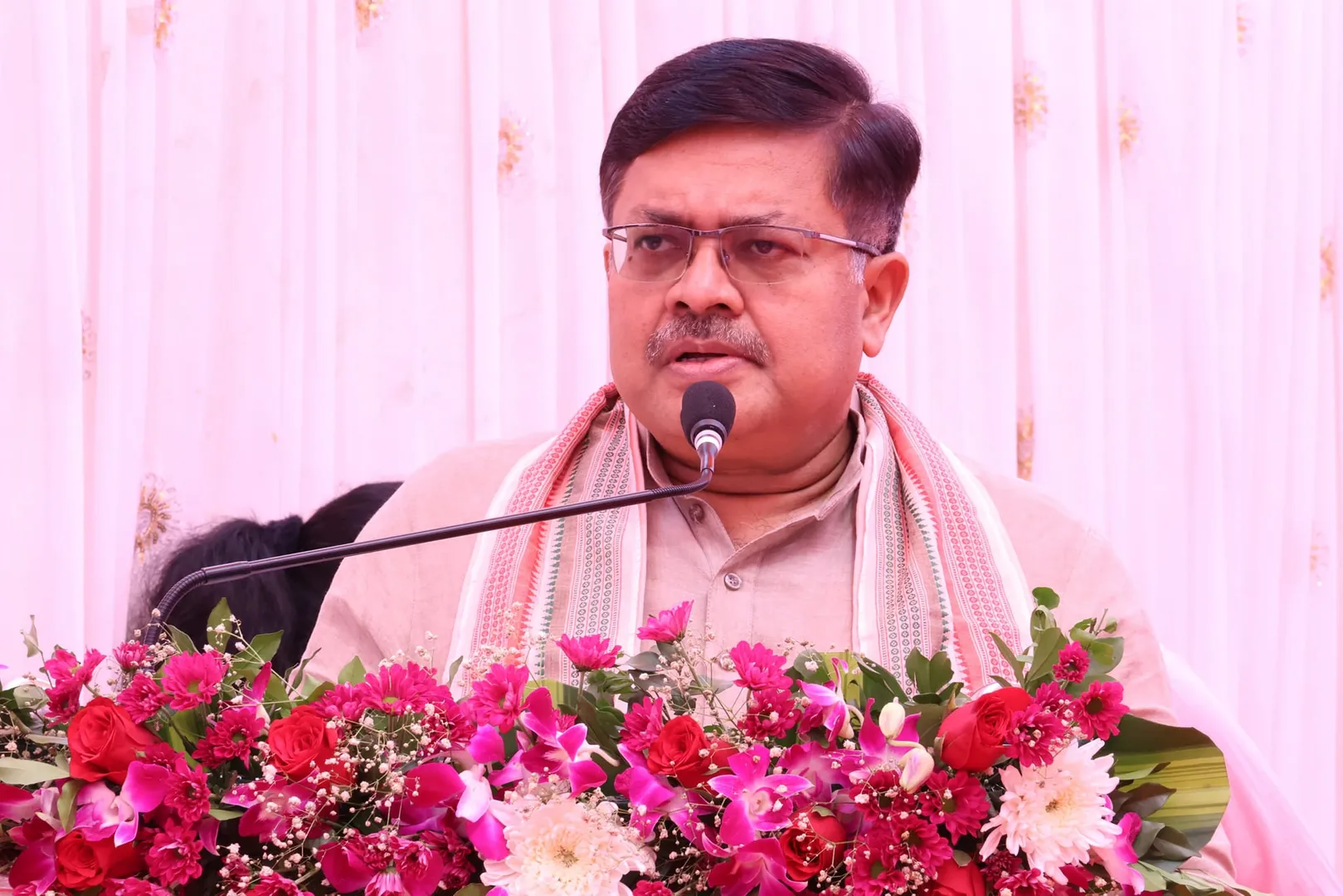
In a move that combines administrative clarity with deep cultural sensitivity, Odisha Law Minister Prithiviraj Harichandan has announced that the second phase of the Ratna Bhandar inventory of the Shree Jagannath Temple, Puri, will be conducted from April 8 to April 10.
This is not just an administrative exercise.
It is the continuation of a long-awaited, historic responsibility—handled with seriousness, structure, and a clear intent to preserve one of India’s most sacred and valuable heritage treasuries.
From Delay to Decisive Action
For decades, the Ratna Bhandar—the treasury of the 12th-century Shree Jagannath Temple—remained a subject of speculation, delay, and sensitivity.
What distinguishes the current approach is decisive leadership backed by systematic execution.
Under the guidance of Minister Prithiviraj Harichandan, the process has moved beyond discussion into action—structured, documented, and transparent.
The announcement of Phase-II is not routine.
It signals continuity, commitment, and confidence.
Technology Meets Tradition
The first phase of the inventory, conducted on March 25, has already set a strong precedent.
Nearly 80% of movable treasures in the Chalanti Ratna Bhandar were inventorised using:
- 3D mapping
- High-resolution photography
- Videographic documentation
This is a landmark shift.
For the first time, a process traditionally confined within ritual boundaries is being strengthened with modern technological validation, ensuring accuracy, accountability, and preservation for future generations.
A Multi-Layered, High-Integrity Process
What adds further credibility to this initiative is the institutional depth of the process.
The inventory is being conducted under tight security, involving:
- Temple servitors
- Banking officials
- Gemologists
- Representatives from the Reserve Bank of India (RBI)
Each ornament is not merely being counted—it is being:
- Matched with 1978 historical records
- Weighed and scientifically assessed
- Digitally documented
- Categorised by metal type
- Securely packed in specially designed chests
This is governance at its best—where tradition is respected, but systems are strengthened.
Protecting Ritual Integrity Alongside Accountability
One of the most critical aspects of this entire operation is the balance between devotion and administration.
Minister Harichandan has clearly ensured that:
- Daily rituals of Lord Jagannath will continue uninterrupted
- Public darshan will remain open
This is not a small achievement.
Managing a process of this scale inside one of the most sacred religious institutions in India—without disrupting spiritual continuity—requires both administrative sensitivity and cultural understanding.
Leadership That Understands the Moment
What stands out in this initiative is not just execution, but intent.
The Ratna Bhandar is not merely a treasury of ornaments. It is a repository of faith, history, and civilizational identity.
Handling it requires:
- Trust
- Discipline
- Transparency
- Respect for tradition
The current approach reflects all four.
Minister Prithiviraj Harichandan’s role in steering this process reflects a calm, methodical, and responsible leadership style—focused not on headlines, but on outcomes.
A Step Toward Institutional Clarity
For years, discussions around Ratna Bhandar were surrounded by uncertainty.
This initiative changes that narrative.
By aligning:
- Historical records
- Modern documentation
- Institutional oversight
Odisha is setting a benchmark for heritage governance in India.
Conclusion: A Moment That Will Be Remembered
The second phase of the Ratna Bhandar inventory is more than a continuation.
It is a consolidation of trust.
It reflects a government willing to take responsibility for sensitive issues and execute them with precision and dignity.
In doing so, it not only safeguards the treasures of Lord Jagannath—but also strengthens public confidence in governance.
And that, in itself, is a legacy in the making.