

Under the leadership of Chief Minister Mohan Charan Majhi, Industries Minister Sampad Chandra Swain and the Industries & MSME Department are driving one of India’s fastest-growing textile ecosystems
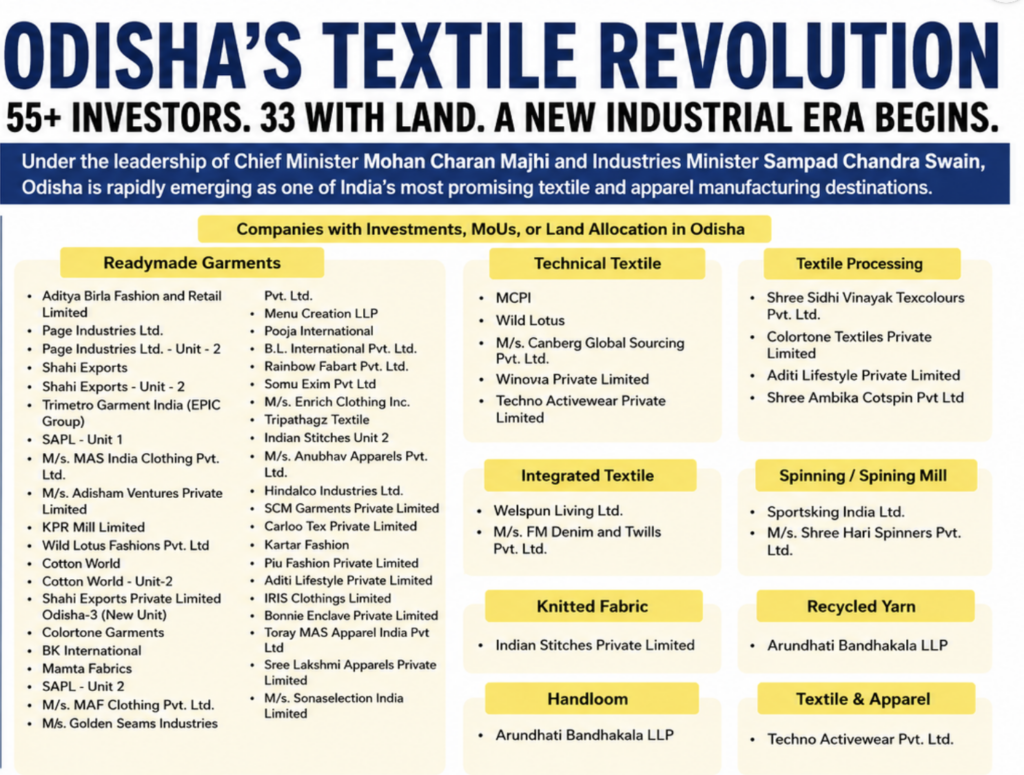
In just a few years, Odisha has emerged as one of India’s fastest-growing destinations for textile and apparel manufacturing, attracting leading domestic and international companies across garments, technical textiles, integrated textiles, spinning, and value-added manufacturing.
This remarkable transformation is the result of a clear industrial vision of the Government of Odisha, led by Chief Minister Shri Mohan Charan Majhi, with the Industries, Skill Development & Technical Education Department under Cabinet Minister Shri Sampad Chandra Swain playing a pivotal role in shaping the state’s industrial future.
At the administrative level, the strategy has been translated into execution under the guidance of Shri Hemant Sharma, IAS, Additional Chief Secretary, Industries & MSME Department, whose extensive engagement with industry stakeholders, investors, and manufacturing ecosystems has helped operationalise the Government’s vision through policy innovation, institutional reforms, and investor facilitation.
Together, the political leadership and administrative machinery have transformed Odisha from a state known primarily for supplying skilled manpower to India’s textile clusters into a rapidly emerging manufacturing destination in its own right.
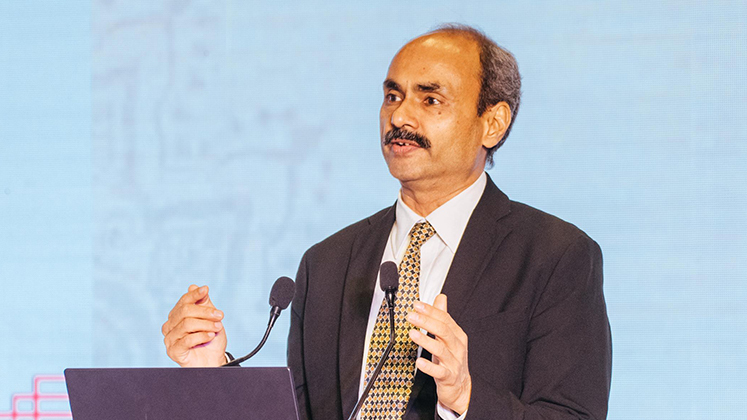
“As of now, around 55 companies have signed MoUs with the state, 33 have already taken land, and nearly 10 are operational,” said Hemant Sharma, Additional Chief Secretary, Industries & MSME Department, Odisha Govt.
A Vision Led by the Government of Odisha
The textile success story did not emerge overnight.
It evolved through a carefully planned industrial strategy formulated by the Government of Odisha, where policy direction was provided by the political leadership while implementation was driven by the Industries Department.
Chief Minister Mohan Charan Majhi has consistently emphasised manufacturing-led economic growth, employment generation, and investment facilitation as key pillars of Odisha’s development strategy.
Working under this vision, Industries Minister Shri Sampad Chandra Swain has actively led the state’s industrial outreach, policy implementation, investor engagement, and expansion of manufacturing ecosystems. His department has focused on making Odisha an investment-friendly destination by improving ease of doing business, strengthening industrial infrastructure, and accelerating project approvals.
Supporting this effort, Additional Chief Secretary Shri Hemant Sharma has played an instrumental administrative role in converting policy into execution, ensuring that investor confidence is backed by efficient governance and institutional responsiveness.
A Team Effort Driving Industrial Transformation
Industry observers note that Odisha’s recent success is the outcome of a governance model where political leadership and bureaucracy have worked in close coordination.
While the Government under Chief Minister Mohan Charan Majhi has provided the vision and policy support, Industries Minister Sampad Chandra Swain has spearheaded departmental initiatives, and the Industries & MSME Department has ensured their implementation through continuous engagement with investors.
This coordinated approach has enabled Odisha to attract investments from leading textile companies, expand industrial clusters, strengthen workforce development, and build an ecosystem that is increasingly competitive on the national stage.
Welspun Living Limited Strengthens Odisha’s Integrated Textile Vision
Among the marquee investments shaping Odisha’s textile landscape is Welspun Living Limited, one of India’s leading home textile manufacturers and a flagship company of the globally diversified Welspun Group. The company’s integrated textile initiatives in Odisha represent a significant milestone in the State’s ambition of becoming a leading textile and apparel manufacturing destination.
Welspun’s expanding presence in Odisha is being driven under the strategic leadership of Shri Partha Patnaik, who is spearheading several of the Group’s key industrial initiatives in the State. Working in close coordination with the Government of Odisha, the Industries Department led by Hon’ble Minister Shri Sampad Chandra Swain, and the administrative leadership of Shri Hemant Sharma, IAS, Welspun’s ongoing and proposed projects are expected to generate substantial employment, strengthen the integrated textile value chain, attract ancillary industries, and contribute significantly to Odisha’s industrial ecosystem.
With its global expertise in home textiles, sustainable manufacturing, and international supply chains, Welspun Living’s investment reflects the growing confidence of world-class companies in Odisha’s business-friendly policies, modern infrastructure, and long-term industrial vision. As the State continues to develop textile clusters and manufacturing ecosystems, Welspun is expected to play a pivotal role in positioning Odisha as one of India’s premier destinations for integrated textile manufacturing and exports.
AMFNEWS Editorial
Odisha’s textile transformation demonstrates the importance of coordinated governance. Vision at the political level, effective ministerial leadership, and professional administrative execution have together created an ecosystem that is beginning to attract national and global manufacturers.
The credit belongs first and foremost to the Government of Odisha, led by Chief Minister Mohan Charan Majhi, with Industries Minister Shri Sampad Chandra Swain providing policy leadership to the sector. The execution by the Industries & MSME Department, under the administrative stewardship of Additional Chief Secretary Shri Hemant Sharma, has translated that vision into measurable outcomes.
As more investments move from Memoranda of Understanding to operational factories, Odisha is steadily establishing itself as one of India’s most promising textile and apparel manufacturing destinations a transformation that has the potential to generate employment, strengthen exports, and reshape the state’s industrial economy for decades to come.
 Prasanta Patnaik